What an AI routine planner actually does
It converts a broad intention like sleeping earlier or studying consistently into a smaller structure that can survive a real day.
AI routine planner guide
When people search for an AI routine generator, they usually are not asking for more complexity. They are asking for help converting vague goals into something realistic, smaller, and easier to start.
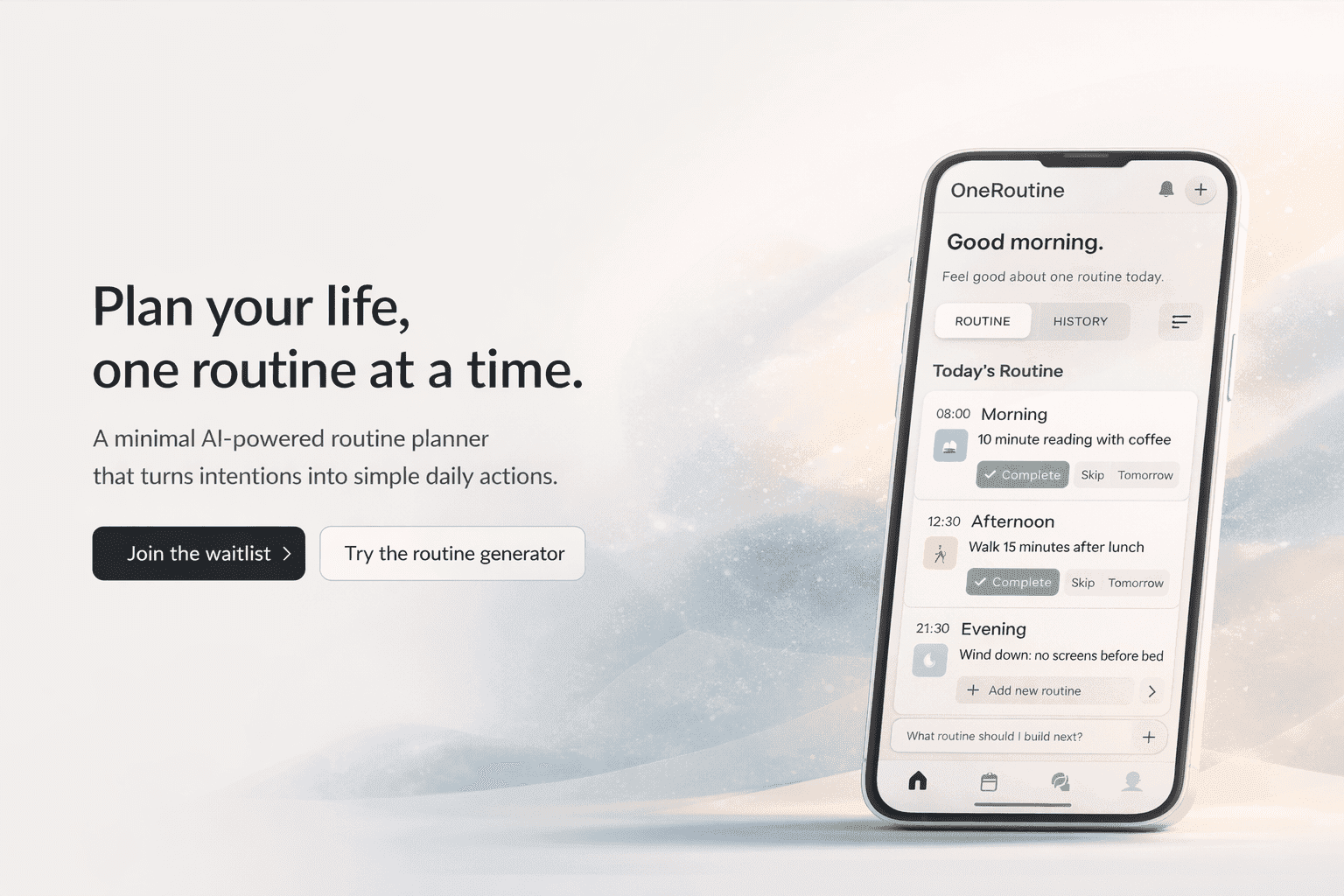
It converts a broad intention like sleeping earlier or studying consistently into a smaller structure that can survive a real day.
Most people do not fail because they lack desire. They fail because they never get a realistic translation from desire to action.
The goal is not only habit generation. The product is being shaped to connect routines, one-time tasks, dates, and longer direction in one planning language.
Why this page exists
A focused page like this gives Google a more precise signal about what OneRoutine is adjacent to: AI-assisted planning, routine generation, and practical habit support. It also gives humans a clearer explanation than homepage marketing alone.
Connect it back to the product
The point is not just to generate a nice-looking routine once. The point is to place that routine beside tasks, dates, and longer commitments so the suggestion becomes part of a real system instead of a disposable prompt output.